
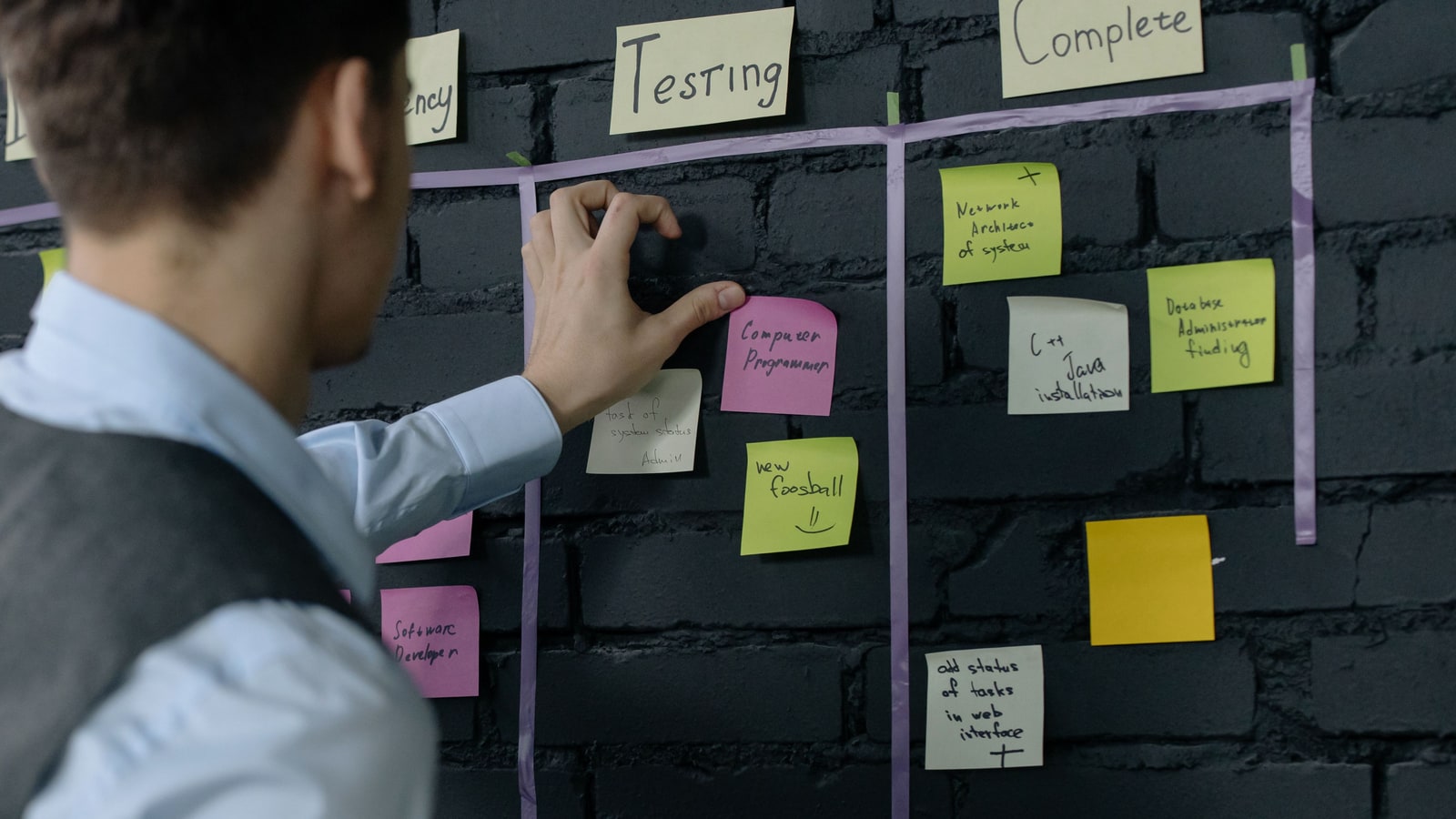
Technology roadmap planning is the work of deciding what deserves attention, what must happen first and what the business is deliberately not funding yet. The finished roadmap matters, but the quality of the decisions behind it matters more.
01
A roadmap cannot rescue unclear priorities
Imagine an established service business with six sensible technology ideas. The customer portal needs improving. The CRM has become awkward. Managers want better reporting. An ageing integration fails often enough to worry people. Somebody has seen an AI tool that could reduce admin. Hosting costs are rising and the current supplier contract is due for renewal.
None of those concerns is silly. The problem is that the business has treated each one as a separate priority. The portal is important to sales. The CRM matters to operations. Reporting matters to leadership. The integration affects customer service. AI sounds commercially urgent. Hosting has a real deadline.
If all six become top priority, the roadmap is not a plan. It is a collection of competing promises. Good technology roadmap planning turns that pressure into a sequence of decisions. It connects commercial outcomes to the systems, people, data, risks and delivery capacity involved.
The goal is not to predict every task for the next three years. It is to give the business a reliable direction, a believable next period of work and clear reasons for changing course when the evidence changes.
02
Choose the planning horizon before choosing the projects
A useful planning exercise begins by agreeing what period the business is making decisions for. For a growing company, a twelve month direction with a much firmer ninety day commitment is often more useful than a detailed multi-year schedule.
The next quarter can be shaped around current evidence, available people and known deadlines. The later months can show direction without pretending that every date is already understood.
Ask what the business needs to be true by the end of that period. For our service business, the outcomes might be faster enquiry preparation, trustworthy weekly reporting, fewer cases delayed by the integration and a supportable portal before a supplier contract changes.
These outcomes create a test for every proposed initiative. A new CRM may help, but it is not automatically the first answer. Better reporting might come from fixing definitions and data ownership before buying another dashboard. AI might help prepare enquiries, but only after the source information is reliable enough to use safely.
03
Bring evidence, not polished project names
Roadmap planning is stronger when the room starts with evidence about the operation rather than prewritten solutions. Useful evidence can include support tickets, customer complaints, process timings, missed deadlines, duplicated data, supplier notices, security findings, failed jobs, manual checks, conversion data and feedback from the people doing the work.
The evidence does not need to be perfect. It needs to be clear enough to separate an observed problem from a strongly held preference.
Suppose managers believe the CRM is slowing the sales team down. A short review may reveal that the biggest delay occurs before information reaches the CRM. Enquiries arrive through several inboxes, attachments are checked manually and a coordinator copies details into the system. Replacing the CRM without changing that route would move the same delay into a newer screen.
This is why the people who understand the business process and the people who understand the technology need to be in the same planning conversation. Evidence keeps the roadmap connected to work that actually happens and makes later reviews calmer because the team can ask whether the facts have changed.
04
Give every initiative the same planning card
Each proposed initiative should be described in the same simple format before it is compared with the others. Record the outcome it supports, current evidence, accountable owner, affected users, expected value, dependencies, rough effort range, specialist skills, next decision and consequence of delay.
This is deliberately lighter than a full project brief. The point is to make initiatives comparable without pretending the team has already completed discovery.
Our ageing integration may have a clear case. Failed synchronisations delay customers, support staff spend several hours each week repairing records and the supplier is removing an old API later in the year. The outcome, deadline and consequence of delay are visible.
The proposed AI enquiry assistant may be less certain. It could save time, but the business does not yet know whether incoming information is consistent enough, what a wrong classification would cost or how staff should review the result. That makes a short discovery or prototype the honest next commitment rather than a full implementation.
05
Expose capacity before sequencing the roadmap
One of the most common roadmap mistakes is to rank a list of projects without checking whether the same people are required by all of them.
Delivery capacity is not simply the number of developers available. A project may need an operations manager to define rules, a finance lead to approve data, a supplier to change an API, a security review, user testing and time from the people expected to adopt the result.
The service business might technically be able to build the portal improvement and reporting changes together. Both may still depend on the same operations lead, the same customer data and the same test users. Starting both could create two half-finished projects and a very busy diary.
Capacity planning should include support, maintenance, security updates, small fixes and supplier management too. Once that capacity is visible, the integration may come first because it has a hard external deadline. Reporting discovery can run alongside it if it needs different people, while the portal change waits for data ownership to be agreed.
06
Plan decision gates, not just delivery dates
Not every roadmap item should move directly from idea to build. Some initiatives need a decision gate where the business reviews new evidence and decides whether to continue, change direction, reduce scope or stop.
For the AI enquiry assistant, the first gate might follow a two week sample review. The team could test whether messages can be classified reliably, whether the required customer data is available and how much human checking remains.
A portal replacement may need a gate after data discovery. If the old system contains duplicate customer identities, undocumented permissions and several unofficial exports, the migration plan will change. Finding that early is useful. It is cheaper than promising a launch date and discovering the data problem during final testing.
Each gate should name the question being answered, the evidence required, the person making the decision and what happens if the result is weak. This is particularly important when choosing between improving an existing system, integrating another product or building something bespoke.
07
Make committed, shaping and waiting mean something
A roadmap is easier to trust when it separates three kinds of work. Committed work has an agreed outcome, owner and capacity. The business understands the immediate scope, major dependencies and evidence of success.
Shaping work is being investigated. A problem is important enough to learn about, but the solution, cost or value is not clear enough for a delivery promise. Discovery, process mapping, data assessment and prototypes belong here.
Waiting work is deliberately not active. It may be valuable later, depend on another change or have lost out to a more urgent need. It remains visible so people do not have to reintroduce it every week, but it has no implied start date.
For our example, the integration upgrade is committed. Reporting definitions and the AI enquiry idea are shaping. The larger CRM replacement is waiting until the business proves whether the problem is the CRM itself or the fragmented process around it. Making waiting work visible shows what would be displaced if a new urgent request appeared.
08
Run a planning session that ends with decisions
A technology roadmap planning workshop should not spend its whole time presenting slides. Circulate the evidence and planning cards beforehand so the session can focus on trade-offs.
Confirm the planning period and outcomes first. Then review deadlines, risks and existing commitments, challenge the evidence, map dependencies, compare value and effort, test the sequence against capacity, classify each initiative and assign the next owner and review date.
The group needs somebody authorised to make prioritisation decisions. Without that, the workshop can produce a colourful board and another meeting request but no roadmap.
Keep a short decision log. Record what was chosen, what was deferred, the evidence used and what could cause the decision to change. A one page view showing outcomes, initiatives, status, dependencies, decision gates and owners is often more useful than a complicated tool nobody updates.
09
Keep the roadmap alive after the workshop
Technology roadmap planning is a rhythm, not an annual event. Committed work needs a short regular review for progress, blockers and changed dependencies. The wider roadmap needs a strategic review often enough to reflect new evidence and business priorities.
For many established businesses, a monthly operating check and a quarterly planning review is a sensible starting point. The roadmap should also define triggers for an earlier review, such as a moved supplier deadline, a larger data problem, a budget change, a security issue or weak evidence at a decision gate.
Changing the roadmap in response is not a planning failure. Quietly leaving an outdated promise in place is.
At each review, confirm that the outcomes, evidence, urgency, dependencies and capacity assumptions remain true. Decide whether shaping work has earned a commitment, whether active work should change and what the business is still choosing not to do yet.
10
A useful roadmap is a record of choices
Technology roadmap planning should leave the business with fewer accidental promises and better next decisions.
For our service company, the answer was not to start six projects. It was to protect the failing integration first, investigate reporting and enquiry automation with defined decision gates, and defer the CRM replacement until the real source of delay was understood.
That order may change when the evidence changes. The value lies in knowing why it was chosen, what the business can support and what would justify a different decision. A roadmap is not a prediction of a perfectly obedient future. It is a visible agreement about outcomes, trade-offs, capacity and the next responsible use of time and budget.
If your technology priorities have become a mixture of urgent fixes, supplier deadlines and promising ideas, I can help review the operation, structure the choices and turn them into a roadmap the business can actually use.
Useful questions
Technology roadmap planning checklist
- Is the planning period clear?
- Does every initiative support a named business outcome?
- Is the current evidence visible?
- Is there an accountable business owner?
- Have system, data, supplier and people dependencies been mapped?
- Has the sequence been tested against real capacity?
- Is uncertain work behind a decision gate?
- Is waiting work visible without implying a date?
- Are success measures and stop conditions clear?
- Is the next roadmap review already scheduled?