
Laravel makes more sense when you follow one real request through it. This beginner's guide explains how routes, validation, controllers, data, screens, queues and tests work together in a business application.
01
Understand Laravel through one ordinary request
Laravel is a framework for building web applications with PHP. That answer is accurate, but it is not especially helpful when you are new to it.
A better way to understand Laravel is to follow one ordinary piece of work through an application.
Imagine a customer visits a company's website and sends an enquiry. The application must recognise the page they requested, check the form, save the right details, show a useful response and perhaps send an email to the sales team. It should reject bad input, protect private data and leave enough evidence for somebody to support it later.
You could write every part yourself in PHP. You would also have to decide where every part belongs, how those parts communicate and which common problems need solving again. Laravel provides a tested structure and a collection of tools for doing that work consistently.
That is the useful beginner's definition. Laravel gives a PHP web application an organised place for its routes, business rules, database records, screens, background jobs and tests.
02
Laravel is a framework, not a programming language
PHP is the programming language. Laravel is software written in PHP that gives developers a framework for building applications.
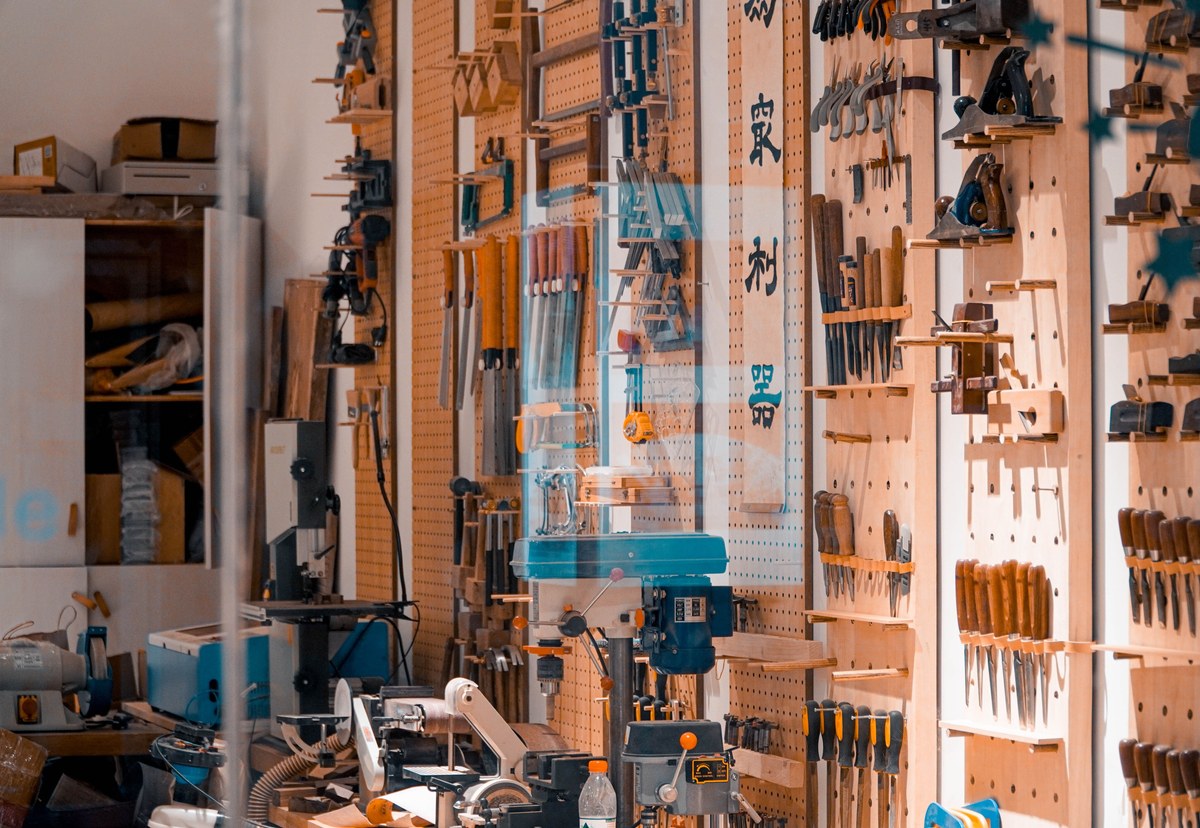
Think of PHP as the material and Laravel as the organised workshop. The workshop does not build the product for you. It gives the work named places, reliable tools and conventions that stop every new job beginning with an empty bench.
This distinction matters because learning Laravel is not a substitute for learning PHP. A developer still needs to understand variables, functions, classes, errors and the way an HTTP request moves between a browser and a server. Database knowledge, security and sensible software design do not disappear either.
Laravel helps by turning common decisions into recognisable patterns. Another Laravel developer can open a well-kept project and make sensible guesses about where the routes, controllers, models, templates and tests live. That shared structure is valuable when an application lasts longer than its first developer.
The current major release is Laravel 13. Laravel follows a regular release cycle, so teams should always check the documentation for the version their application actually uses. A tutorial written for an older version may teach the right concept while giving commands or file locations that no longer match the project in front of you.
03
Start with the route into the application
Our customer opens an enquiry page. The browser sends a request for a URL, and Laravel's router decides which part of the application should handle it.
A route is more than a friendly web address. It connects an HTTP method and a path to a piece of behaviour. A request to view an enquiry form and a request to submit that form may use the same path, but one reads information while the other changes it. Treating them as different routes keeps that intent visible.
Very small applications can answer a route directly. As the work becomes more involved, the route normally points to a controller. The controller receives the request and coordinates the next steps.
The controller should not become a cupboard where every bit of logic gets thrown. Its useful job is to understand the incoming request, ask the appropriate parts of the application to do their work and return a response. The actual rules may belong in a form request, action, service, policy or model depending on the size and shape of the application.
Laravel gives you the route and controller conventions. Good judgement still decides how much responsibility each class should carry.
04
Validate before trusting the form
The customer enters a name, email address and short description of what they need. Browsers can provide helpful checks, but the server must not trust that the request came from your own form or that the browser rules were followed.
Laravel's validation tools let the application describe the information it expects. The name may be required, the email must have a valid shape and the message may have a sensible maximum length. If the request fails those rules, Laravel can return useful errors without saving incomplete data.
Validation is not the same as a business decision. A field can contain a valid date while still breaking a rule such as bookings needing two working days' notice. The first check asks whether the data has the right form. The second asks whether the requested action is allowed.
Keeping those ideas separate makes the application easier to explain and test. It also avoids a common beginner problem where every rule is squeezed into one controller method because that is the first place the request appears.
Laravel also includes protection for common web concerns such as cross site request forgery, authentication, authorisation, encryption and password hashing. These are useful foundations, not a promise that any application built with Laravel is automatically secure. The team still has to configure them properly and decide who should be allowed to do what.
05
Store the data with migrations and Eloquent
Once the enquiry is valid, the application needs to store it.
Laravel migrations describe changes to the database structure in code. A migration might create an enquiries table with columns for the customer's name, email address, message, status and creation time. Because that change lives with the application code, another environment can apply the same structure in a controlled way.
This is much safer than asking somebody to remember which columns they added manually to a production database three months earlier. Migrations provide a history, but they still need review. Removing a column full of live customer data is dangerous even when the command doing it looks tidy.
Eloquent is Laravel's object relational mapper. In ordinary terms, it lets developers represent a database record as a PHP model. An Enquiry model can read and write enquiry records and describe relationships to other models, perhaps an assigned user, customer or follow up task.
Eloquent makes common database work readable, but it does not remove the database. Developers still need to understand indexes, constraints, transactions and query performance. An elegant line of PHP can generate a surprisingly expensive database query if nobody checks what it is doing.
For a beginner, the important mental model is simple. The migration defines how the data is stored. The model gives the application a clear way to work with that data.
06
Return a useful response
After saving the enquiry, Laravel returns a response to the browser.
For a traditional server rendered application, that response may be HTML produced with Blade, Laravel's templating system. Blade lets a developer combine an HTML layout with application data, reusable components and simple display logic.
Laravel can also work as the backend for other interfaces. It might return JSON to a Vue, React or mobile application. Inertia can connect Laravel controllers to modern frontend components without forcing the application into a completely separate frontend API. Livewire offers another route for interactive interfaces while keeping much of the work in PHP.
There is no prize for choosing the most fashionable option. A mostly administrative portal may be clear, fast and maintainable with Blade. A highly interactive product may justify a richer frontend. The decision should follow the interaction, the team and the ownership plan.
Whichever approach is used, the user should receive an unambiguous result. The enquiry was submitted once, the next step is clear and refreshing the page should not quietly create duplicates.
07
Move slow work into a queue
The application may need to send an acknowledgement, notify the sales team, check a company record or create something in a CRM.
Doing all of that before returning the page can make the customer wait. It also couples a successful form submission to the availability of every connected service.
Laravel queues let suitable work run in the background. The enquiry can be stored first, then a queued job can send the email or update another system. If that external service is briefly unavailable, the job may be retried without asking the customer to submit the form again.
Queues are useful, but they add operational responsibility. Workers must be running. Failed jobs need to be visible. Retries must not create duplicate invoices, messages or records. Background work is not work that can be forgotten.
That pattern shows why Laravel is more than a page templating tool. The same framework can coordinate the immediate web request and the less visible work surrounding it.
08
Tests protect the journey as it grows
Our enquiry journey now has several promises. A valid request creates one record. An invalid email does not. A visitor cannot see private enquiries. An authorised staff member can update the status. A notification is queued after the record is safely stored.
Laravel includes support for unit and feature tests. A unit test checks a small piece of behaviour in isolation. A feature test can make a request to the application and check the response, database changes, permissions and queued work together.
For most business applications, the feature test is where beginners quickly see the value. It describes behaviour in terms close to the real job. When the application changes, that test can catch a broken permission or missing validation rule before a customer does.
Tests do not prove that the whole product is correct. They protect the cases the team chose to describe. The quality comes from choosing meaningful behaviour, keeping tests readable and adding coverage when a real defect reveals a missing case.
09
What Laravel gives a business
The business benefit is not that a controller has a fashionable name. It is that common application concerns can be built in a consistent and supportable way.
A well-designed Laravel application can provide login and permissions, structured records, workflow screens, reporting, document storage, notifications, integrations and scheduled jobs within one coherent system. The framework has a mature ecosystem and clear conventions, which can make hiring, handover and long term maintenance more practical.
Laravel is well suited to customer portals, internal operational systems, CRMs, booking tools, membership products, data driven websites and API backends. It can begin with one useful workflow and grow without requiring every enterprise concern on day one.
It is not automatically the right answer for every website. A small static marketing site may not need a database or server side application at all. A specialist realtime, embedded or data science workload may suit another technology better. The sensible question is not whether Laravel is good. It is whether its strengths match the product that needs to be owned.
10
Laravel provides structure, not magic
Follow the enquiry one last time.
The route recognises the request. Validation checks the input. A controller coordinates the action. A migration defines the database structure. An Eloquent model stores the record. Blade or another frontend presents the result. A queue handles slower follow up work. Tests protect the promises the journey makes.
Each part has a name and a place. That is the main reason Laravel feels productive once the mental model clicks.
The framework saves teams from rebuilding common plumbing, but it does not decide the business process, protect poor data or make every technical choice correct. A useful Laravel application still starts with a clear problem and a small, complete workflow.
If you are learning, build something that records real information and has one person waiting for the outcome. Trace each request through the system until you can explain where it goes and why. That understanding will take you further than memorising a catalogue of Laravel features.
Useful questions
Laravel beginner's mental model
- PHP is the language. Laravel is the framework.
- A route decides which code handles an incoming request.
- Validation checks the shape of incoming data.
- A controller coordinates the response and next steps.
- Migrations describe changes to the database structure.
- Eloquent models give the application a clear way to work with records.
- Blade, Inertia, Livewire or an API can deliver the interface.
- Queues move suitable slow work outside the immediate request.
- Feature tests protect complete user journeys.
- Laravel provides structure, but good product and technical decisions still matter.