
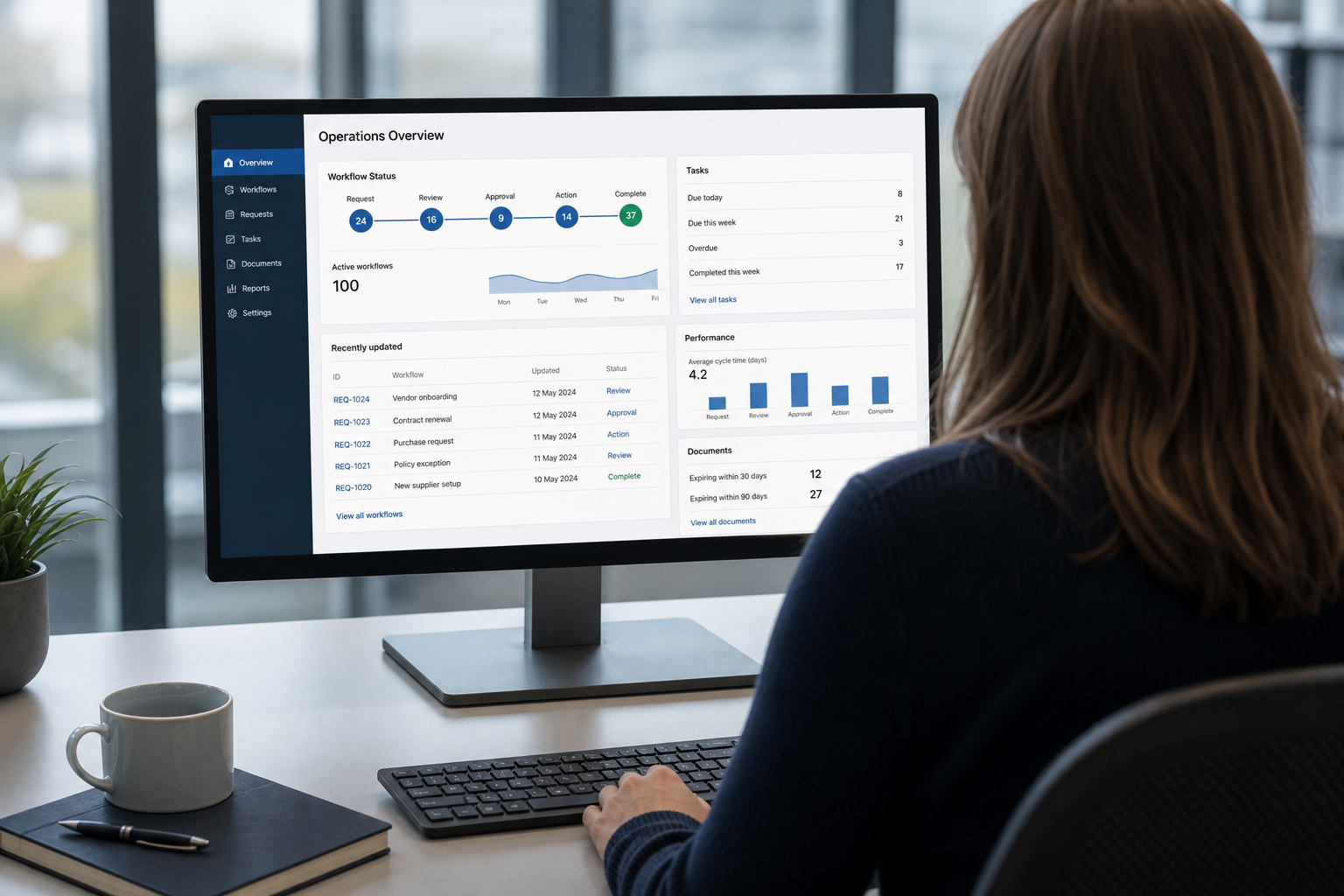
Improve what exists
Improve an existing operation.
Your process already works, but spreadsheets, generic software or workarounds create friction. I learn how the work really moves, then improve, connect or replace only what needs to change.
Bespoke business software
Systems that remove friction, bring clarity and help the business move faster.
Two ways to start
The right route depends on whether an existing operation needs improving or a new software idea needs turning into something practical.
Improve what exists
Your process already works, but spreadsheets, generic software or workarounds create friction. I learn how the work really moves, then improve, connect or replace only what needs to change.

Shape what comes next
You have a useful software idea but need the goal, users and process made clear. I help shape the first valuable version, then build it in controlled phases that prove value early.
What bespoke software can become
These are some past examples of systems I have delivered or shaped, not a fixed menu. I can help with a much wider range of software work. If your company needs an internal tool, web application, integration or new software product, bring me the problem and I will tell you whether I am the right fit and the sensible way to start.
Secure places to submit information, manage activity, share documents and complete important tasks.
Systems that bring customers, enquiries, jobs, communication and delivery progress into one useful view.
Guided journeys that collect the right information, validate it and move people through the process.
Applications for availability, appointments, resources, reminders and the work that follows a booking.
Controlled generation, review and approval processes with permissions and a clear record of what happened.
Operational data turned into clear visibility so people can spot delays, risk and what needs attention.
Reliable rules and calculations for quotes, pricing, eligibility, risk or other commercial decisions.
Connections between existing systems that reduce duplicate entry and move repeatable work automatically.
Built for real use
I choose the architecture around the business need. My most frequent application stack is Laravel and Vue, supported by established tools for data, testing, deployment and support. The goal is software that is secure, maintainable and practical for the people who depend on it.
Clear architecture, consistent conventions and code another experienced developer can understand and continue.
Appropriate permissions, validation, safe handling of sensitive information, backups and controlled access.
Defined acceptance criteria and automated tests where they add confidence to business-critical behaviour.
Reliable releases, monitoring and documentation, with monthly retainers available for hosting, backups, data integrity, support and new features.
Frameworks and tools I frequently use
API integrations
When information already exists in one system, people should not have to export, copy and retype it into another. I can connect your software to the tools around it so approved data moves reliably, useful statuses come back and exceptions stay visible.
Integrated an insurance system with Microsoft Dynamics so compliance information could move into the CRM and policy documents could be created from approved data.
Connected 8x8 call logging and recording with Amazon S3 so compliance records could be stored securely and retained for seven years.
A controlled route
Each phase reduces uncertainty and creates something useful before unnecessary complexity is added. The work stays visible, decisions remain manageable and you keep control of what happens next.
Learn the operation, users, constraints and what success should look like.
Agree the workflows, priorities and the smallest useful first version.
Build in short, controlled stages and show working progress regularly so feedback can shape the next step.
Launch, learn from real use and choose the next improvement using evidence rather than assumptions.

A selection of operational platforms, internal tools and software products I have helped shape and deliver.
 View project
A structured portal for installer evidence, review, follow-up and certification workflows.
 View project
A separate operational system built around website delivery checks for a regulated financial-services business.
 View project
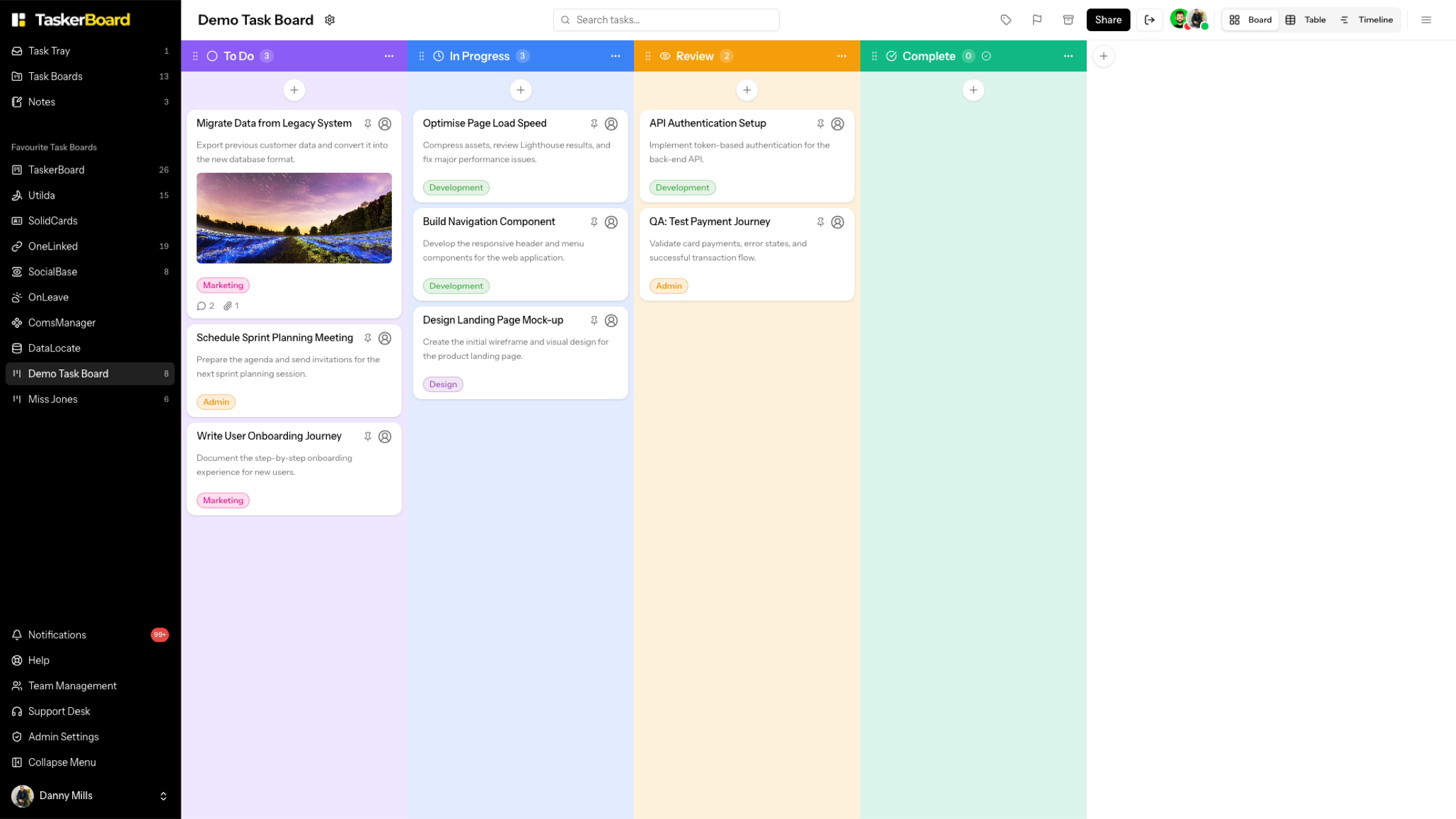
Projects, boards, task cards and shared information brought into one calmer place for delivery teams.
 View project
A focused analytics product for understanding visitors, traffic sources, page activity and important events without relying on cookies.
Work directly with me
You are not passed from a salesperson to a separate delivery team. I learn how the operation works, help make the right software decisions and remain hands-on through design, development, launch and ongoing support.

The sensible next step
I build practical web-based systems around a real business need. Examples include CRMs and job-management systems, customer or staff portals, registration and onboarding systems, document and approval workflows, dashboards, calculators and new software products. The examples on this page are not a fixed menu.
No. Start with the business problem, the people involved and what needs to improve. If the idea is not ready to build safely, I can define the workflows, users, data, integrations and smallest useful first version through a separate discovery phase.
Yes. I first work out what should be kept, improved, connected, automated or replaced. A completely new system is only the right answer when improving the existing operation will not deliver the result the business needs.
I work in short, visible stages rather than disappearing for months. You review working progress regularly, feedback from the people who will use the system helps set the next priority, and each phase produces something useful before unnecessary complexity is added.
Often, yes. I can connect software through suitable APIs so approved information moves between systems without staff exporting, copying and retyping it. The work considers data mapping, access, logging, failures and which system is responsible for each piece of information. Complex or poorly documented integrations normally need technical discovery first.
Yes. A working prototype can let decision-makers and future users click through a realistic version of the main workflow before a larger investment is approved. It is a learning and decision tool using sample or anonymised data, not production software.
A focused first production phase typically takes six to twelve weeks once the requirements are clear. Larger systems are divided into separate phases so the business can review progress, approve priorities and avoid committing to an oversized all-or-nothing project.
A focused first production phase normally falls between £15,000 and £40,000. Discovery, a working prototype, integrations, data migration, multiple user roles, regulated data or additional workflows can change the investment. I recommend the smallest sensible paid first step before quoting the build.
Yes. I can provide a monthly retainer covering managed hosting, backups, monitoring, security updates, data integrity, practical support and agreed feature improvements. The scope and response arrangements are agreed around what the system and business actually need. If you prefer to manage it elsewhere, I can also document and hand the software over cleanly.
For client-funded work, the agreed deliverables belong to your business once the relevant invoices have been paid. Ownership, access, third-party services and reusable components are made clear before work begins. I can continue with support and improvements, or document and hand the system over cleanly.